
How to plan safer gutter care
Look for overflow and drainage problems from ground level and use qualified services for risky ladder work.
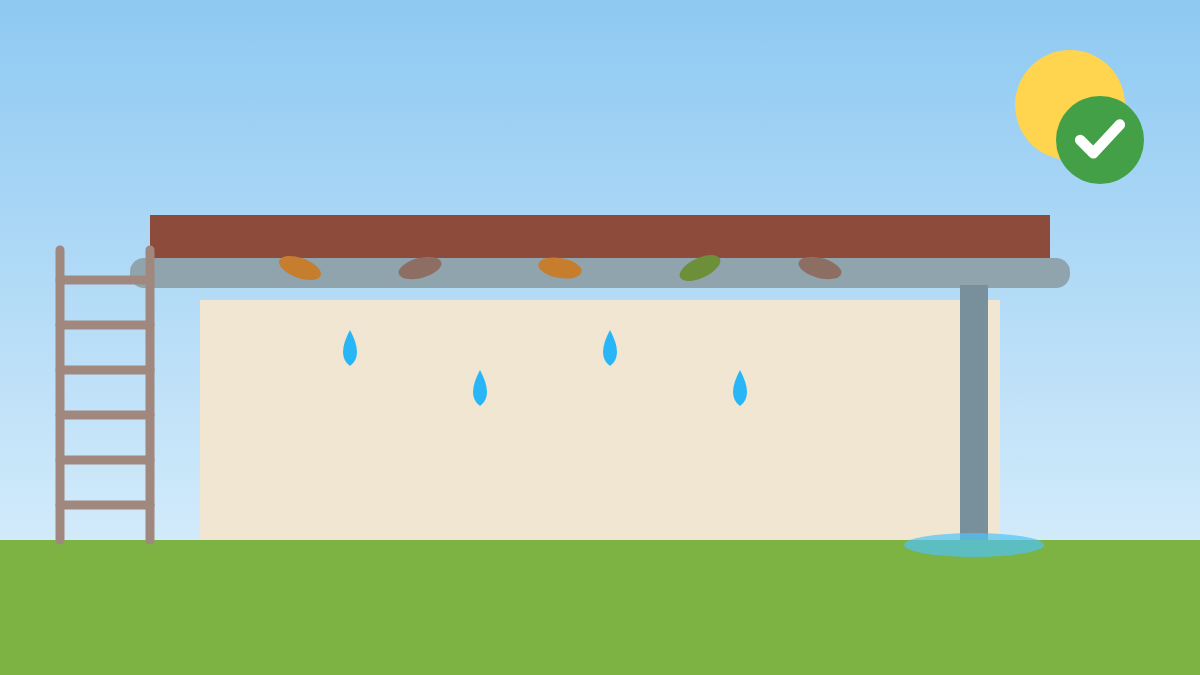
What to check first
Practical first steps
Observe whether downspouts discharge away from the foundation and whether gutters overflow in rain.
Safety: Avoid risky ladder work; use qualified gutter services for elevated sections.
- From a sheltered, ground-level position, note where overflow occurs during ordinary rain, if safely visible.
- In safe weather, photograph visible sagging, separated joints, and downspout outlets without climbing.
- Record where discharged water pools and whether nearby interior moisture appears. Do not approach during a storm.
What changes the right next step?
Mark each concern on a simple sketch and share photos with the service provider. Note whether overflow recurs at the same location. A ground-level view cannot confirm the condition of hidden gutter sections or roof connections.
Questions to ask before paying for repairs
Will you inspect the full drainage path rather than only remove visible debris? Are cleaning, reattachment, damaged sections, and disposal included or separately quoted? Can you provide before-and-after photos and explain any unresolved drainage concerns?
Safety and limitations
Do not use ladders, climb onto a roof, reach near overhead wires, or attempt elevated gutter cleaning or repairs. Keep the inspection observational and ground-level. Use qualified services for access, cleaning, repairs, and assessment of persistent overflow.
Sources and further reading
These references support general safety, maintenance, or estimate-comparison principles. They are not a diagnosis or a source of live local prices. Use your model-specific manual and applicable local requirements for equipment procedures.