
Roof maintenance from safe vantage points
Monitor visible roof condition from the ground and watch for interior moisture signs without taking unnecessary fall risks.
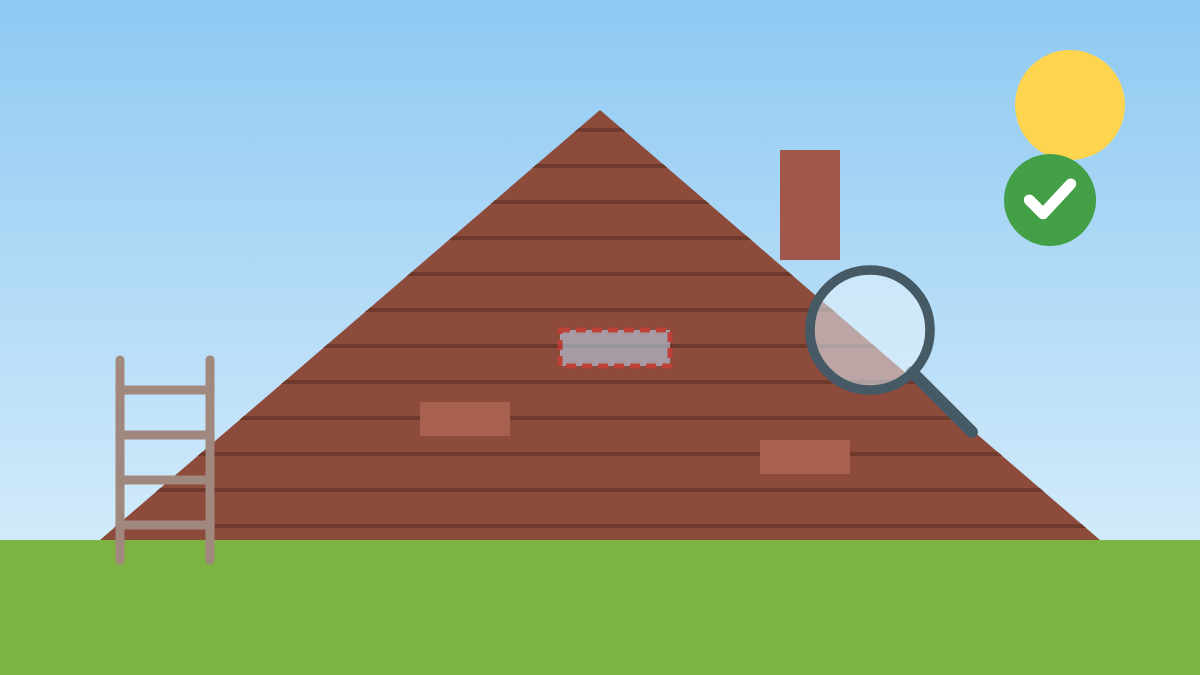
What to check first
Practical first steps
Look for visible missing materials, sagging, damaged flashing and interior water stains from a safe location.
Safety: Observe from the ground only. Do not access or repair the roof yourself, even when it looks dry or easy to reach.
- From stable ground in safe weather, photograph roof areas visible without climbing.
- Note where materials appear missing or displaced and when the change was first noticed.
- Inside normal living areas, record new stains, dripping, or ceiling changes. Do not enter an attic to trace the source.
What changes the right next step?
Keep earlier photos, storm observations, and repair records together. Describe the location of an interior stain without assuming that it identifies the roof entry point. Ask a roofer to inspect areas you cannot safely see.
Questions to ask before paying for repairs
What evidence identifies the problem area? Can you provide inspection photos and explain repair versus replacement options? Does the written scope include affected materials, cleanup, exclusions, and how the finished repair will be checked?
Safety and limitations
Do not climb a ladder, walk on any roof, lift roofing materials, or attempt a temporary patch. Keep away from sagging or bulging ceilings and water near electrical fixtures. Request qualified roofing help for suspected damage or active leaks.
Sources and further reading
These references support general safety, maintenance, or estimate-comparison principles. They are not a diagnosis or a source of live local prices. Use your model-specific manual and applicable local requirements for equipment procedures.