
Water heater maintenance and warning signs
Follow your manufacturer's maintenance instructions and watch for leaks, corrosion and abnormal operation.
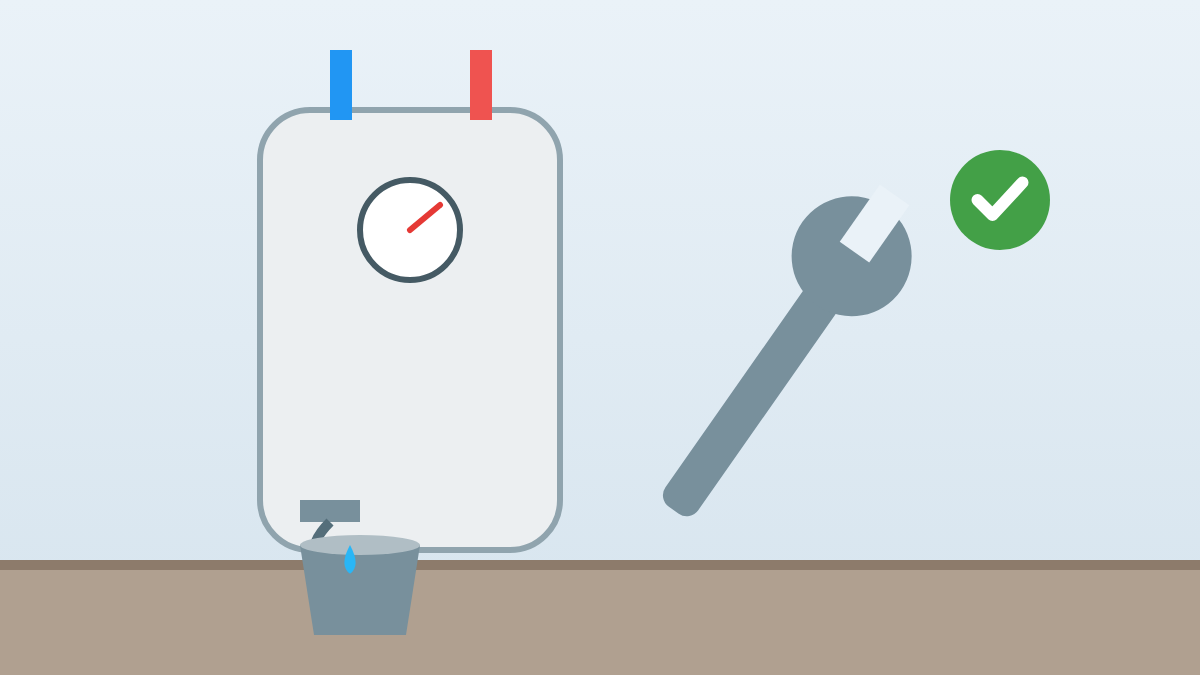
What to check first
Practical first steps
Check for visible leaks, corrosion, unusual sounds and the model-specific maintenance schedule.
Safety: Keep maintenance observational. Have a qualified technician handle gas, electrical, relief-valve, and hot-water draining or flushing work.
- From a dry, accessible location, photograph visible moisture, rust, or staining without touching hot surfaces.
- Record when unusual sounds or changes in hot-water availability occur.
- Find the model-specific manual and previous service records; read an equipment label only if it is safely visible.
What changes the right next step?
Tell the plumber where water appears and whether it is recurring. Do not assume the tank itself is leaking from a puddle alone. Ask which maintenance tasks apply to this model and who should perform them.
Questions to ask before paying for repairs
Where is the moisture coming from? What service is recommended by this model's instructions? Does the estimate distinguish maintenance, repair, and replacement? Will you document findings, exclusions, and any follow-up needed?
Safety and limitations
Do not drain or flush the heater, operate or block the relief valve, open electrical covers, or service gas connections. Keep clear of hot discharge and wet electrical areas. If you smell gas, leave and seek emergency help from outside.
Sources and further reading
These references support general safety, maintenance, or estimate-comparison principles. They are not a diagnosis or a source of live local prices. Use your model-specific manual and applicable local requirements for equipment procedures.